
Staff Feature: Rachel Pizante
August 3, 2026
- •
- •
- •
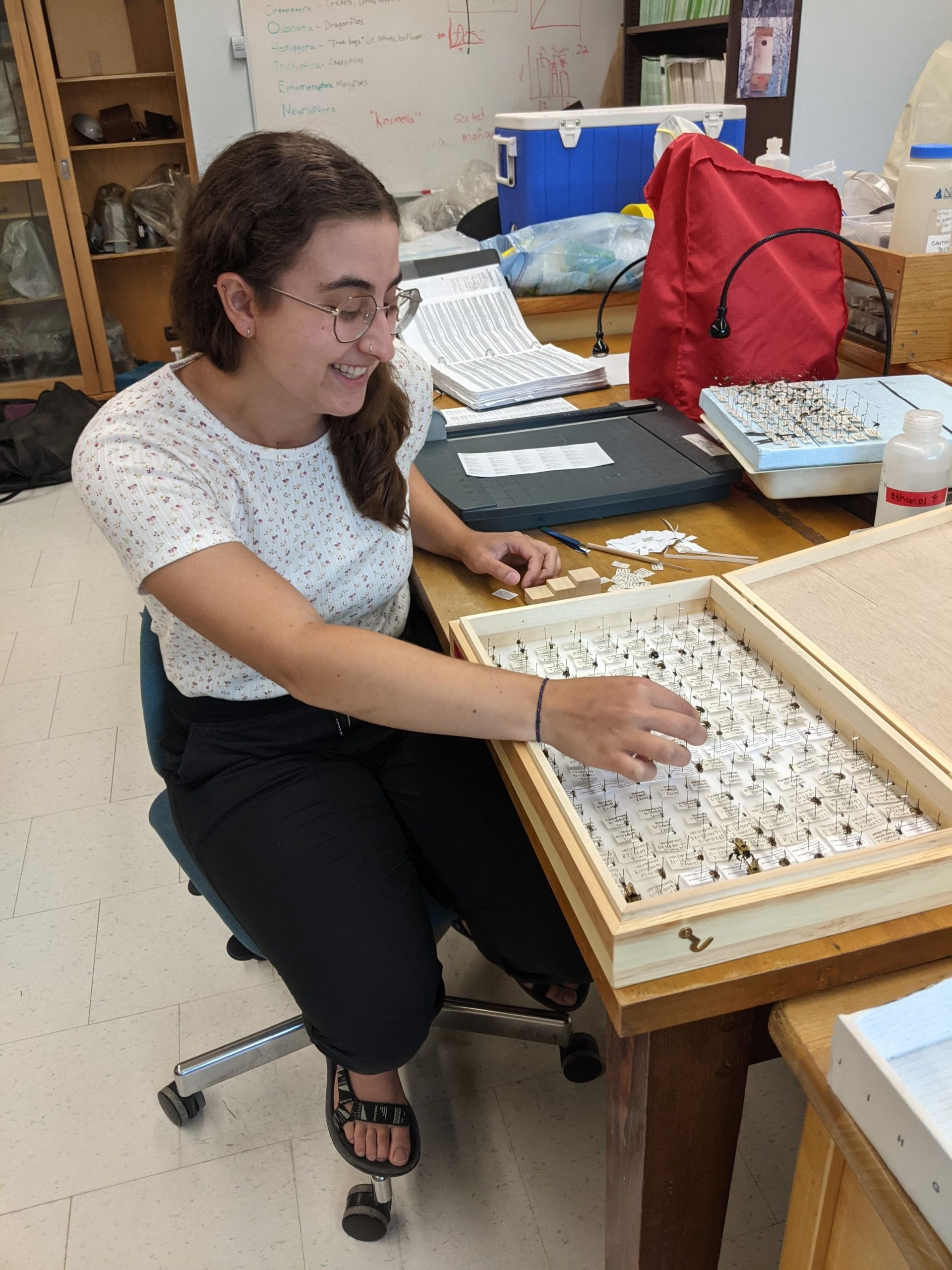
Working with the entomology collection. Photo © N/A
Wildlands Advocate article by Jill Girgulis, AWA Outreach and Communications Specialist
Read the PDF version here.
As Alberta’s oldest wilderness conservation group, AWA has been a voice for the environment on countless conservation issues plaguing our province over the last 60 years.
The majority of our long, storied history (those decades preceding the digital age) only exists in our physical archive and wilderness resource centre, the Roger Creasey Memorial Library, located in the basement of our office in northwest Calgary.
As our 60th year as an organization was coming to a close last December, we realized the need to digitally preserve all these valuable decades of conservation history, which led to the addition of Rachel Pizante to the AWA team.
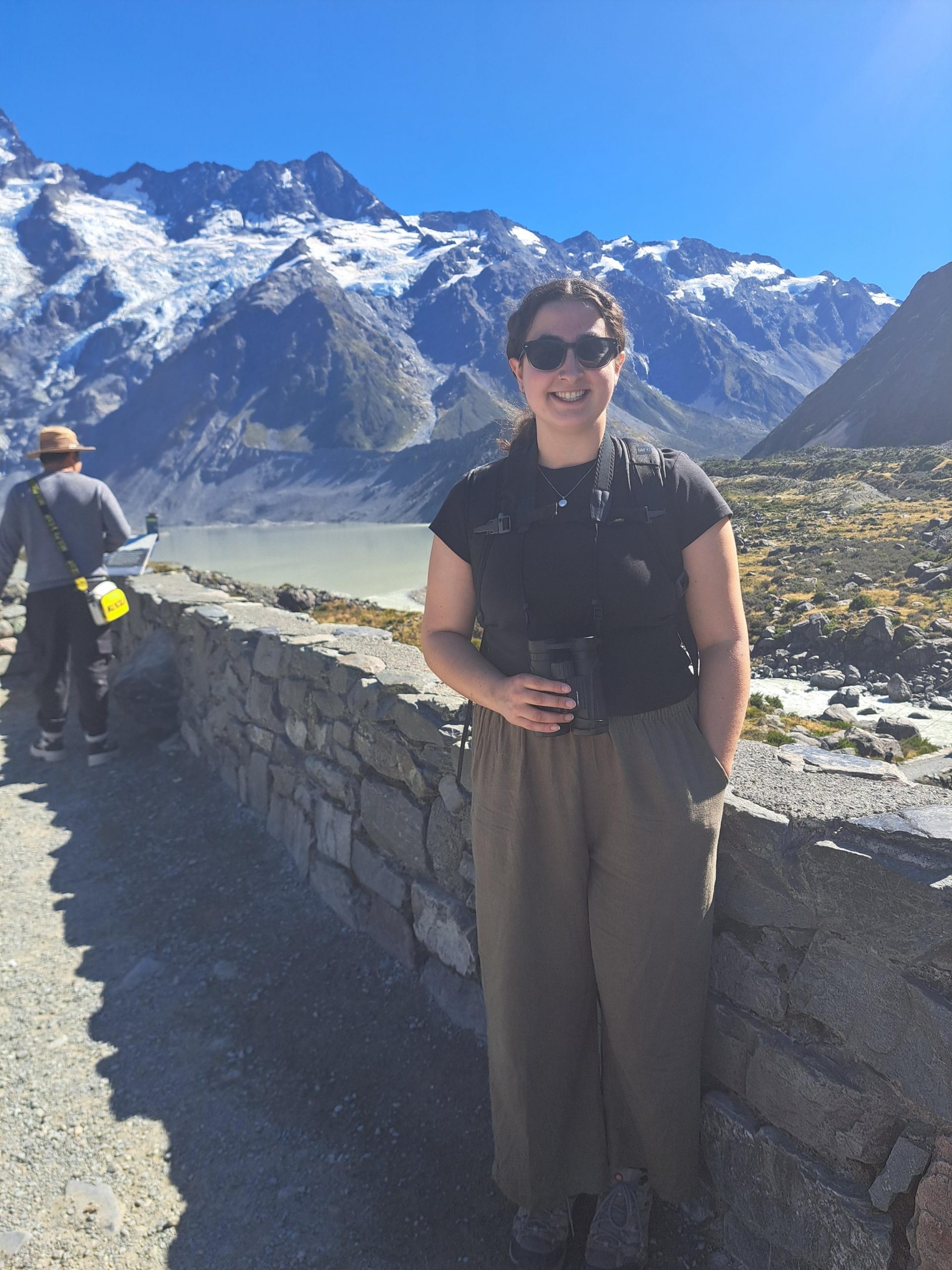
In New Zealand near Aoraki (Mount Cook). Photo © N/A
Rachel was hired as our Conservation Archivist in early February, after having completed her Bachelor of General Science with Minors in Biology and Geography at Mount Royal University (MRU) and her PhD in Conservation Biology at the University of Alberta (U of A).
She gained exposure to archival work through her PhD, in which she studied how resource availability affected the diversity, movement, and resource use of flower-visiting insects in agricultural and restoration settings. Part of this project involved curating a collection of hoverflies for inclusion in U of A’s E.H. Strickland Entomological Museum.
This particular museum serves multiple functions: there’s a teaching collection, separate from the main collection, which comprises the specimens brought out for university courses, and there’s the main collection, which largely exists for the purpose of vouchering.
“When you do entomology work, you have to voucher your specimens, which means you take one or two individuals of every single species you find and you put them into a museum,” Rachel explains. “Each specimen is called a voucher. If anybody wants to check your work to see if you correctly identified a species, then they can vouch for you.”
The museum also serves as a useful resource for university students. “It does make identification for future students easier because then you have reference material. It’s really, really hard to identify an insect without reference material.”
Unfortunately, museums such as this one at U of A are vulnerable to being decommissioned by universities looking to develop new office space.
“All the collections are really at risk, which is too bad because there are so many benefits to having a collection, especially at universities, and they do require a lot of active maintenance to make them useful,” Rachel says, lamenting the fact that institutions don’t always seem to see the value in these collections.
Fortunately, throughout her PhD, Rachel was able to take full advantage of the museum and its vast array of resources.
“I was collecting a lot of hoverflies from around Alberta, mostly Central Alberta, a little bit in the grasslands,” Rachel says of her fieldwork days. “I had to put together a voucher collection, which is the specimens that actually get integrated into the museum. I also did some very, very light toe-dipping into the taxonomic world because I found a few species that hadn’t been found in Alberta, either before or in a really long time.”
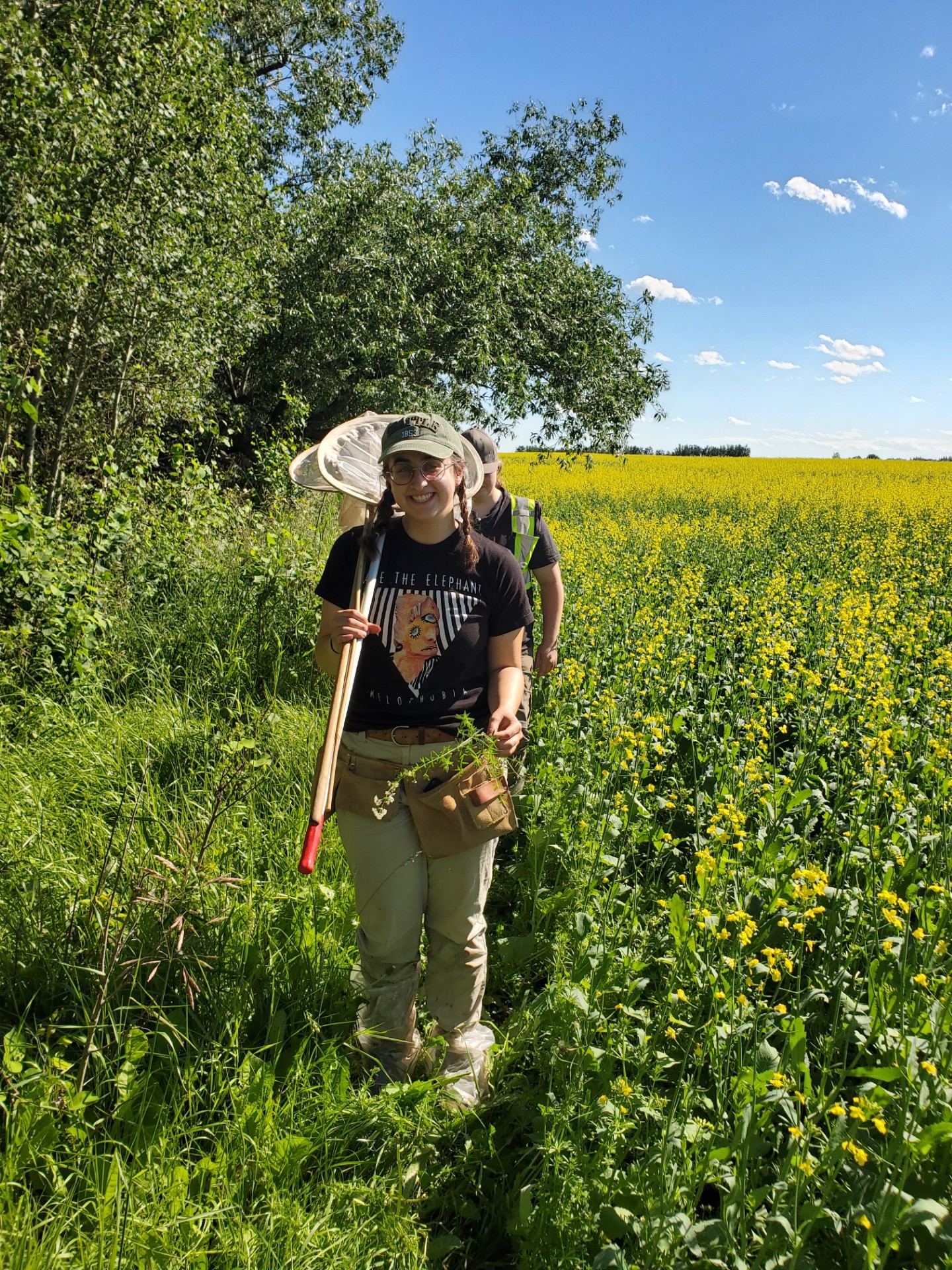
Studying insect movement and resource use in and around canola field. Photo © C. Frost
Given her educational background, when it came time to enter the workforce, Rachel was excited to discover that a conservation group in the non-profit space was not only currently hiring, but was looking to bring someone aboard to archive their own vast collection of resources. Now, a few months into the role (at the time of this interview), Rachel has been enjoying her days down in the library.
“It’s really interesting to go through the history of the organization and different environmental issues throughout the province,” she says. “There’s a ton hidden [in the library] and you never know when it’s going to be useful — or not, but even then it’s good to keep this kind of stuff around.”
When asked if there has been anything unexpected that she’s learned while making her way through the archives, Rachel cites the regular appearances of some names such as Cliff Wallis and Martha Kostuch that will likely sound familiar to long-time AWA members.
Through her archiving, Rachel has also noticed the cyclical nature of environmental discussions in the province. “It seems like we have these conversations and then everybody kind of forgets or we resolve the conversation or it gets left, and then people forget and we have that same conversation again,” she explains. “That’s most evident so far in the water files, especially damming the Slave River. It feels like every 20-ish years, there’s a call to put a dam on the Slave River.”
In Rachel’s opinion, understanding the historical context of conservation in Alberta is something that deserves greater emphasis in environmental degree programs. “I think there is a bit of neglect for the history of conservation, especially in the province,” she says. “I would like to see more attention paid to that in degrees … because learning about what happened in the past recontextualizes what’s happening [now], which I think is really important.”
To close out the interview, Rachel was encouraged to share her favourite place to visit in Wild Alberta. “One of my favourite places to go in the province is the Castle area. I really like camping there in particular, and the Lynx Creek campground is my favourite.”
In terms of where she’d like to visit next, Rachel has her eyes on Alberta’s dunes — what she describes as a “hot spot for insects” — particularly because of the insects living there that aren’t found anywhere else in the province.
And while it’s not in Wild Alberta, she’s also interested in taking a trip to Saskatchewan’s Grasslands National Park. “I love grasslands. They’re really interesting spots for insects, especially for flies — bees as well, but my heart lies with the flies a little more,” she explains. “It’s great that they’ve protected some grasslands because we don’t often get [this ecosystem] protected because often you’re able to farm on it.”
The park may be a 10-hour drive away, but Rachel intends to make it a future summertime excursion. “It’s supposed to be beautiful, and the stargazing is supposed to be incredible.”
This interview has been edited for clarity and brevity.
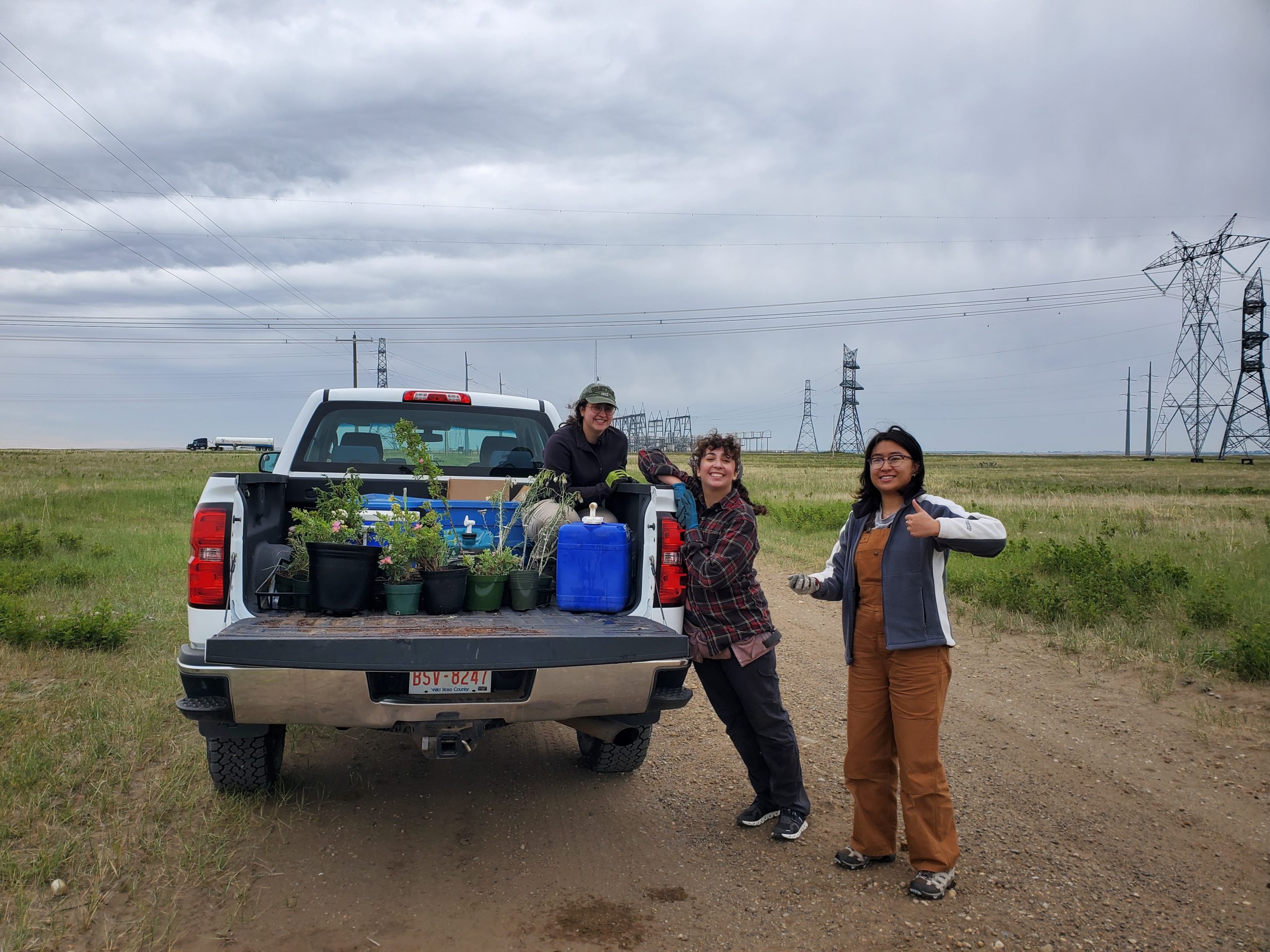
Heading into the field to look at insect-flower preferences and how they change across natural regions. Photo © C. Frost