
Staff Feature: Pamela Narváez-Torres
November 18, 2026
- •
- •
- •
By Jill Girgulis, AWA Outreach and Communications Specialist
Read the PDF article here.
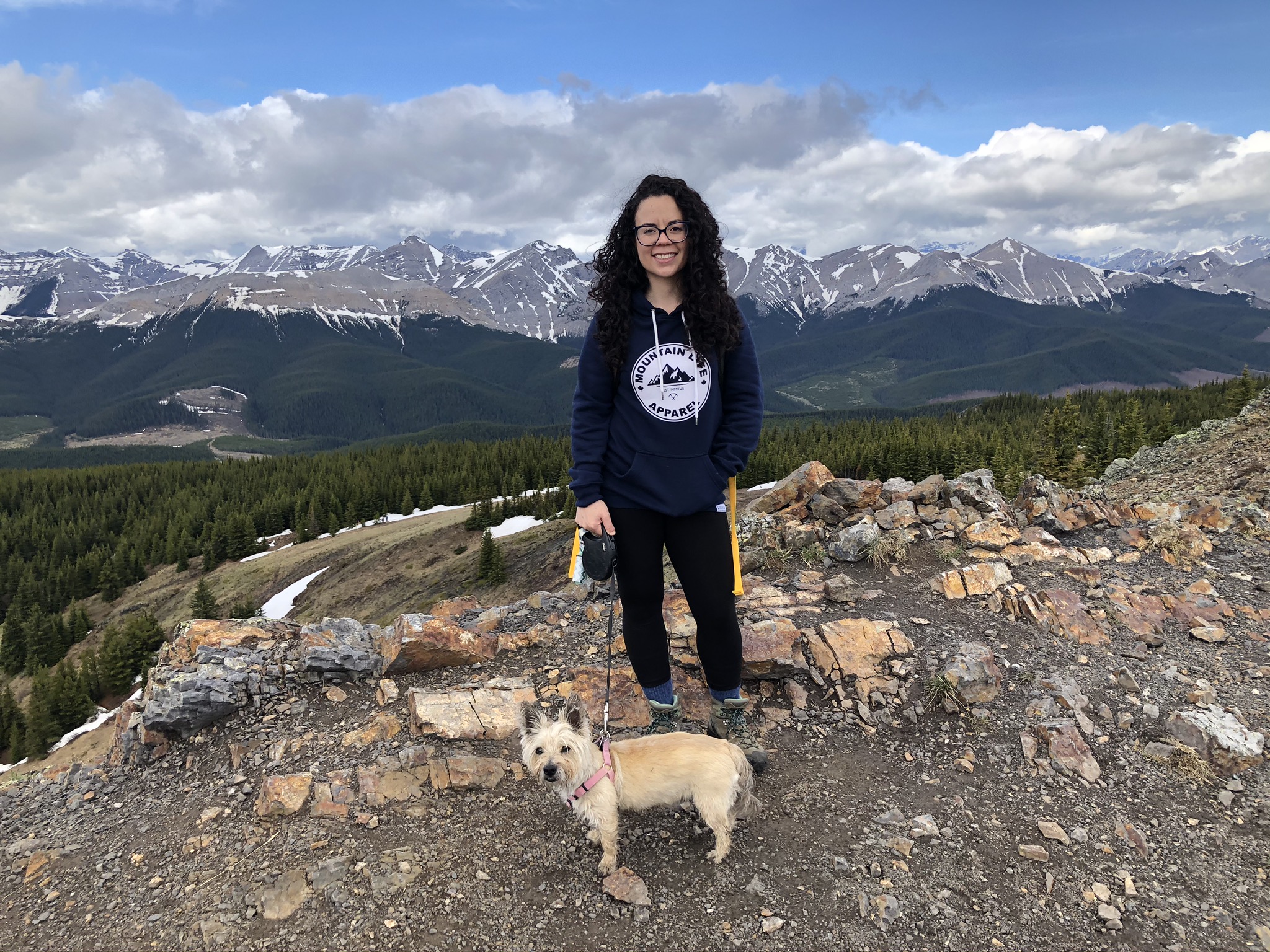
Pamela on Jumpingpound Mountain with her dog Kaila. Photo © A. Paulson 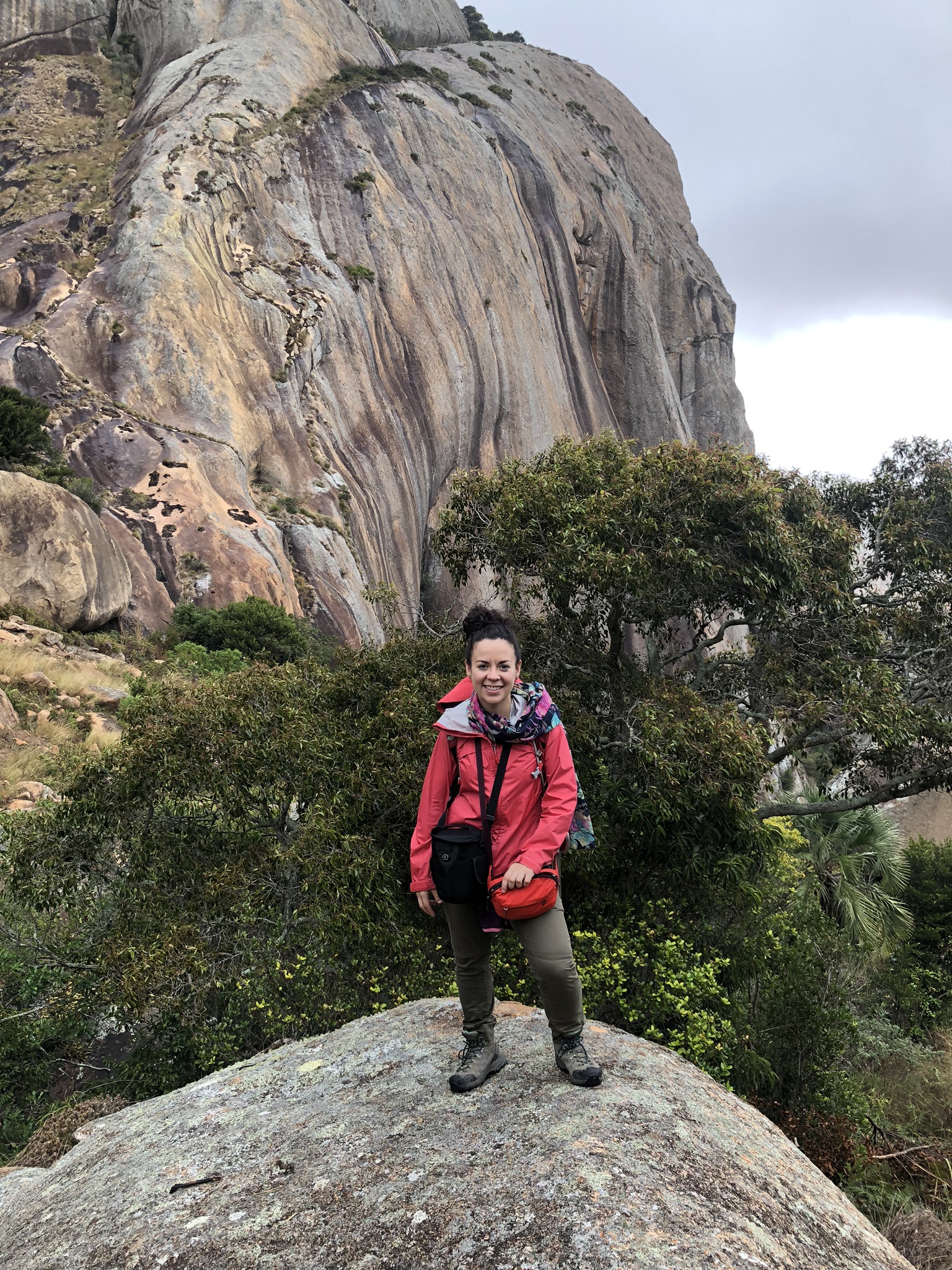
Hiking in Anja Community Reserve in Madagascar. Photo © N. Guthrie
For wildlife biologist and AWA Conservation Specialist Pamela Narváez-Torres, growing up outside of Canada (she’s lived here for 10 years but is originally from Mexico) meant that she wasn’t previously aware of the extent of our environmental concerns.
As Pamela explains, “From my perspective, as a foreigner, you think Canada does everything great. Everyone just looks at Canada as a great example of how conservation is done… so I wasn’t really paying close attention to issues in Alberta.”
It wasn’t until she moved here for the next phase of her graduate studies that she began to better understand the local conservation issues plaguing our province. “I started paying more attention to what was going on in Alberta, and I realized that it wasn’t as I once thought,” Pamela says, and she credits the work of organizations including AWA for contributing to her increased awareness.
Pamela officially joined the AWA team in the fall of 2024, after having completed a Bachelor of Science in Biology from the National Autonomous University of Mexico and a Master of Arts in Anthropology from the University of Calgary’s Department of Anthropology and Archaeology. She’s also a PhD candidate at the University of Calgary in the same department as her master’s degree, and is in the midst of writing her dissertation.
As a Conservation Specialist, one of Pamela’s primary — and preferred — areas of focus at AWA is the caribou file. “I became a wildlife biologist because I like working with animals,” she admits. Her AWA work also includes representing AWA as a board member in the Ronald Lake Buffalo Herd Cooperative Management Board, as well as being responsible for the boreal region, oil and gas, Wood Bison, boreal-region forestry, and chronic wasting disease files.
The caribou file in particular is a “really complex topic,” Pamela explains. “There’s just so many things happening with land-use planning and different interests that fight for the same resources, like oil and gas, forestry, and then, of course, the wild species that are in wild spaces that the government is not interested in protecting.”
To Pamela, the situation with Alberta’s Threatened caribou reminds her of a similar one from the 1970s with the Mexican Wolf (a genetically distinct subspecies of Gray Wolf in North America). “We used to have wolves in Mexico, and the populations used to span the north of Mexico and the south of the U.S. But with the arrival of cattle in the States, they started this eradication campaign because wolves were seen as a direct threat to cattle.”
But the problem wasn’t stopping, so eventually this U.S.-based eradication campaign expanded to Mexico, “to the point where there were almost no wolves left in Mexico and the United States.”
What followed from this point was a cooperation agreement between Mexico and the U.S. to bring the species back, namely in the form of breeding programs. “They started with less than five individuals and a couple of decades later, they had over 100 individuals,” Pamela says. “And right now in captivity, there’s over 300 individuals. So a lot of them are still in captivity, but there’s been this effort to reintroduce them into the wild.”
As this example shows, the process of bringing this species back from the brink has not only taken several decades, but has also required international cooperation, considerable funding, and ongoing advocacy work (in this case, to challenge public perception of predators). “I like [this example] because it shows how much work it takes,” Pamela says.
She also considers the Mexican Wolf situation a potential indicator of what’s to come for Alberta’s Woodland Caribou. “If you get to the point where you have almost no individuals or populations left, it’s going to take a lot to bring them back.”
As she points out, “It’s not an easy task, so the government should start working on it right now and maybe start working on the things that took those populations to that point, like the challenges driving them to extinction or to extirpation.”
In other words, while it’s encouraging to see some recovery in Mexican Wolf populations, “it would have been better if we had avoided all this from the beginning,” and the same applies to caribou in Alberta.
“We’re at a point where the federal government and other organizations have started breeding programs because there are only a handful of individuals left,” Pamela says. At the same time, there are still a few populations that could be self-sustaining, so long as we “leave them alone and protect their environment and actually recover their habitat.”
Boreal Caribou habitat is located in the boreal ecoregion of Alberta. Found in the northern aspect of the province, the boreal is one of the places in Wild Alberta that Pamela hopes to spend more time. “I would really, really love to go more to the north of the province,” she says, noting that the majority of her work with caribou, Wood Bison, oil and gas, and forestry relates to Northern Alberta. “I care deeply about protecting the north of our province even if I don’t get to visit often.”
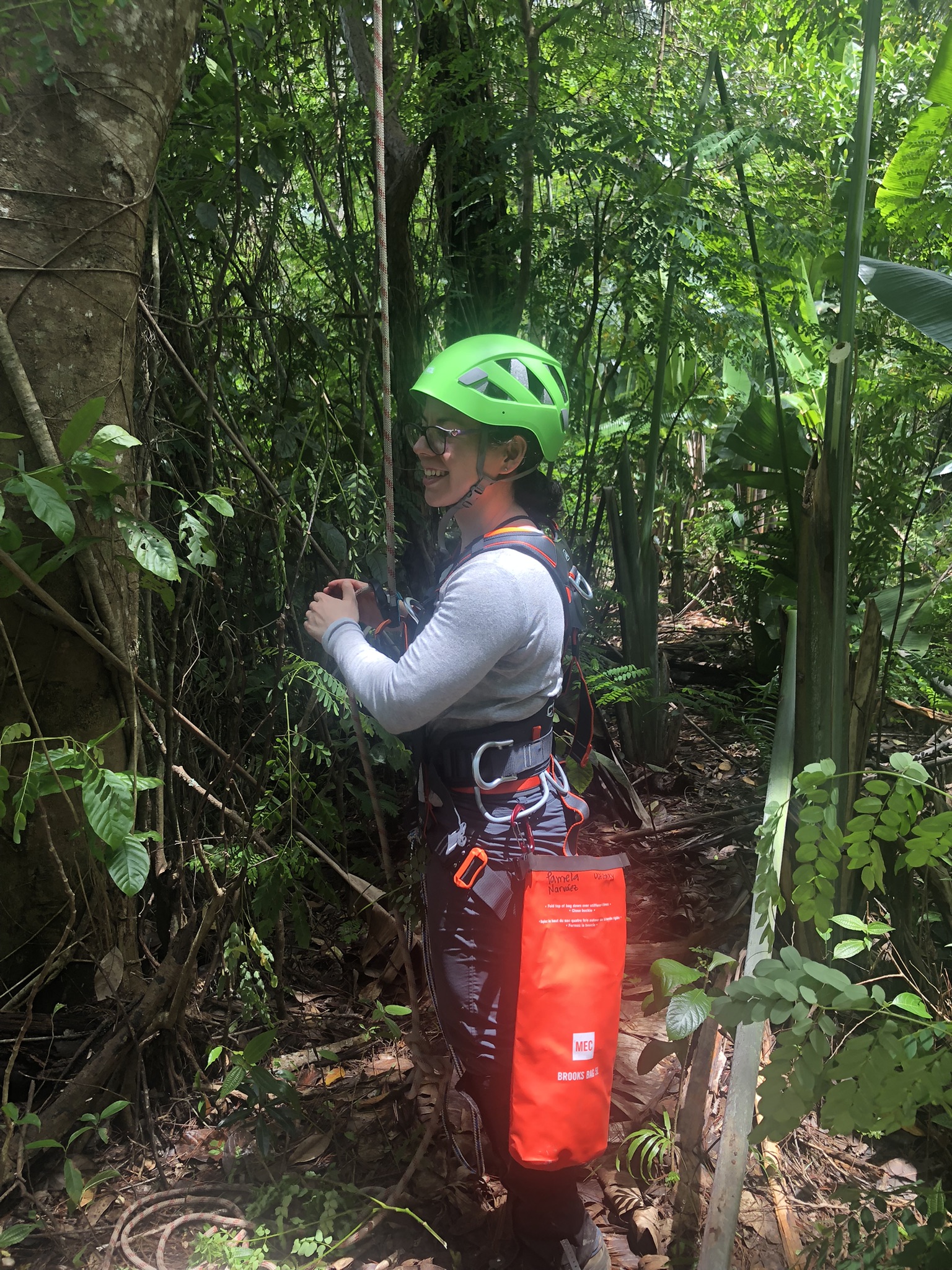
Pamela climbing trees in Madagascar as part of her PhD research. Photo © M. J. E. Rahariniaina
As for her favourite wild spaces in the province? “Like a lot of people in Calgary, I really like going to the mountains,” Pamela says, citing Jumpingpound Mountain in Kananaskis Country as a particular standout. “I know we’re very lucky to have the mountains and the prairies so close.”
She also has fond memories of visiting Dinosaur Provincial Park. “It kind of feels like you’re on a different planet,” Pamela says of the iconic hoodoos and coulees. “That’s how I picture it. Like, you’re just on the prairies and then suddenly you get to this space where everything looks different.”
This interview has been edited for clarity and brevity.