
Joint News Release: Alberta’s new draft sub-regional plans miss the mark for protecting caribou and nature
October 13, 2026
- •
- •
- •
- Bison
- Boreal Forest
- Caribou
- Caribou Mountains
- Coal
- Energy
- Land Use
- Little Smoky
- Little Smoky
- Oil and Gas
- Oil Sands
- Rocky Mountain and Foothills Forests
- Species at Risk
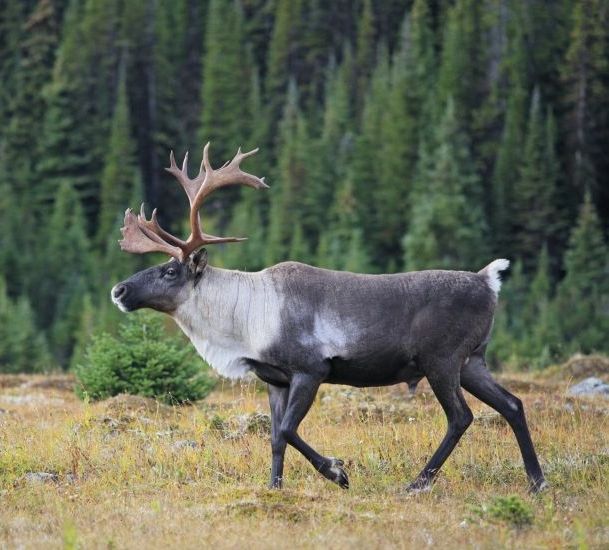
Mountain woodland caribou bull. Photo © John E. Marriott
October 13th, 2026
Alberta’s new draft sub-regional plans miss the mark for protecting caribou and nature
Calgary – Four of Alberta’s largest environmental organizations have come together to raise the alarm about the impact three draft government sub-regional plans — that cover almost one-fifth of the province — will have on the future of the iconic woodland caribou.
Woodland caribou in Alberta continue to be profoundly harmed due to industry-caused habitat loss. Listed as Threatened under both Canada’s Species at Risk Act (SARA) and Alberta’s Wildlife Act, the original intent of sub-regional plans (SRPs) was for the province to demonstrate how woodland caribou populations would be conserved and recovered. The Government of Alberta released the Red Earth, Caribou Mountains, and Berland draft SRPs for public engagement without the evidence needed to demonstrate how woodland caribou conservation and recovery will be achieved. Caribou recovery is merely stated as a “goal” to reach in 100 years. This lack of information limits the public’s ability to provide meaningful feedback on long-lasting land use decisions that will impact vast regions of the province.
“These draft plans have failed caribou. They don’t meet Albertans’ expectations that land use plans will address environmental, social and economic objectives at the same time. Instead, what we are seeing is a prioritization of industry above all else,” says Kaitlyn Philip, Campaign Director with Canadian Parks and Wilderness Society Northern Alberta.
The SRPs prioritize industrial development, including doubling oil and gas production and expanding timber harvest, while missing any opportunity to provide meaningful, long-term protection for caribou habitat. This disconnect highlights an overall lack of concern for caribou.
“Caribou cannot wait 100 years for their habitat to reach 65 percent undisturbed. The draft plans provide no supporting data demonstrating how their proposed industrial development and restoration measures will achieve this objective within that timeline. Given the urgency of caribou recovery, a 100-year objective without evidence that it can be achieved is not a credible path forward,” says Pamela Narváez-Torres, Conservation Specialist at Alberta Wilderness Association.
Alberta’s current SRP engagement runs counter to evidence-based policymaking, and it removes the public’s ability to access transparent information on the implications of the plans. The lack of necessary analyses harms not only caribou, but also the broader ecosystem, wildlife, and communities as critical habitat becomes increasingly destroyed by influential industrial sectors.
“Responsible energy development means balancing oil and gas production with maintaining adequate habitat for threatened species like caribou. These draft plans fail to meet this standard and need to be strengthened,” says Simon Dyer, Deputy Executive Director at Pembina Institute.
The window to provide feedback is only open until October 26, 2026 for the Caribou Mountains and Red Earth plans, and November 12, 2026 for the Berland plan.
We call on the Government of Alberta to immediately release the necessary analyses to enable informed public review. If the analyses are not ready to be released, engagement periods must be extended until after the data have been made publicly available. Additionally, we call on the Government of Alberta to modify the draft SRPs to reflect these analyses and ensure land-use planning meets caribou recovery objectives.
“A process that develops sub-regional plans without the evidence needed to determine whether caribou habitat will recover is a process designed to fail Alberta’s remaining caribou populations,” says Cheryl Bozarth Soll, President of Nature Alberta.
Moving forward, future SRPs should not be released until all information required to assess implications of the plans are provided.
For more information, please contact:
Pamela Narváez-Torres, Conservation Specialist, Alberta Wilderness Association: cs2@abwild.ca
Cheryl Bozarth Soll, President, Nature Alberta: president@naturealberta.ca
Kaitlyn Philip, Campaign Director, CPAWS Northern Alberta: kphilip@cpaws.org
Simon Dyer, Deputy Executive Director, Pembina Institute: simond@pembina.org
Background:
Engagement Guide for the draft Berland, Caribou Mountains and Red Earth sub-regional plans
- Woodland caribou were listed as Threatened under the federal Species at Risk Act (SARA) in 2003. The federal Recovery Strategies for the Woodland Caribou (Rangifer tarandus caribou), Boreal and Southern Mountain populations, in Canada provided provincial and territorial jurisdictions an opportunity to develop range plans to conserve and recover woodland caribou populations and their critical habitats, giving jurisdictions five years to develop and implement those plans.
- In 2019, Alberta established ministerial sub-regional task forces to help develop woodland caribou-focused land-use plans in five of Alberta’s 11 proposed sub-regions. AWA and CPAWS NAB participated in these task forces and helped develop recommendations intended to balance economic activities with caribou conservation and recovery.
- The Governments of Canada and Alberta signed the Section 11 Agreement for the Conservation and Recovery of the Woodland Caribou in Alberta under SARA in October 2020. The five-year agreement committed Alberta to complete and implement 11 sub-regional plans (SRPs), restore critical habitat, obtain at least 65 percent undisturbed habitat in each range, and achieve self-sustaining caribou populations over the long term.
- Only three SRPs have been completed so far: Bistcho Lake (2022), Cold Lake (2022, but now part of South Athabasca), and Upper Smoky (2025). The Section 11 Agreement expired at the end of 2025 without Alberta meeting its commitments or demonstrating a credible path to caribou recovery. Four additional draft SRPs have been released for public consultation since December 2025: South Athabasca, Caribou Mountains, Red Earth, and Berland.
- The five caribou populations covered by the last five draft sub-regional plans are already living in disturbed landscapes. As of 2023, undisturbed habitat represented only 12.5 percent of the A La Peche winter range, 0.7 percent of the Little Smoky range (both part of the Berland sub-region), 41.2 percent of the Caribou Mountains range, 33 percent of the Yates range (both part of the Caribou Mountains sub-region), and 21.4 percent of the Red Earth range. These figures are far below the 65 percent undisturbed habitat threshold identified in the federal recovery strategy as necessary to provide a 60 percent probability of supporting self-sustaining caribou populations.
Access the PDF version of this joint news release here.