
News Release: The world’s only wild Whooping Crane nesting ground is now a Key Biodiversity Area (KBA)
October 19, 2026
- •
- •
- •
News release by Wildlife Conservation Society Canada
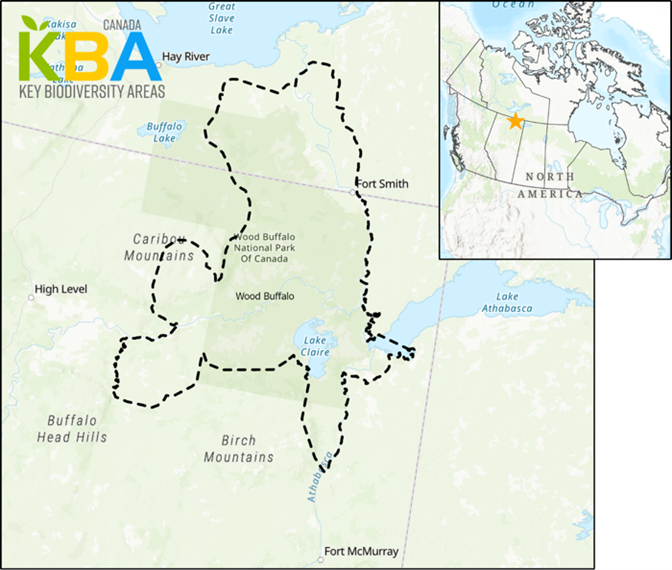
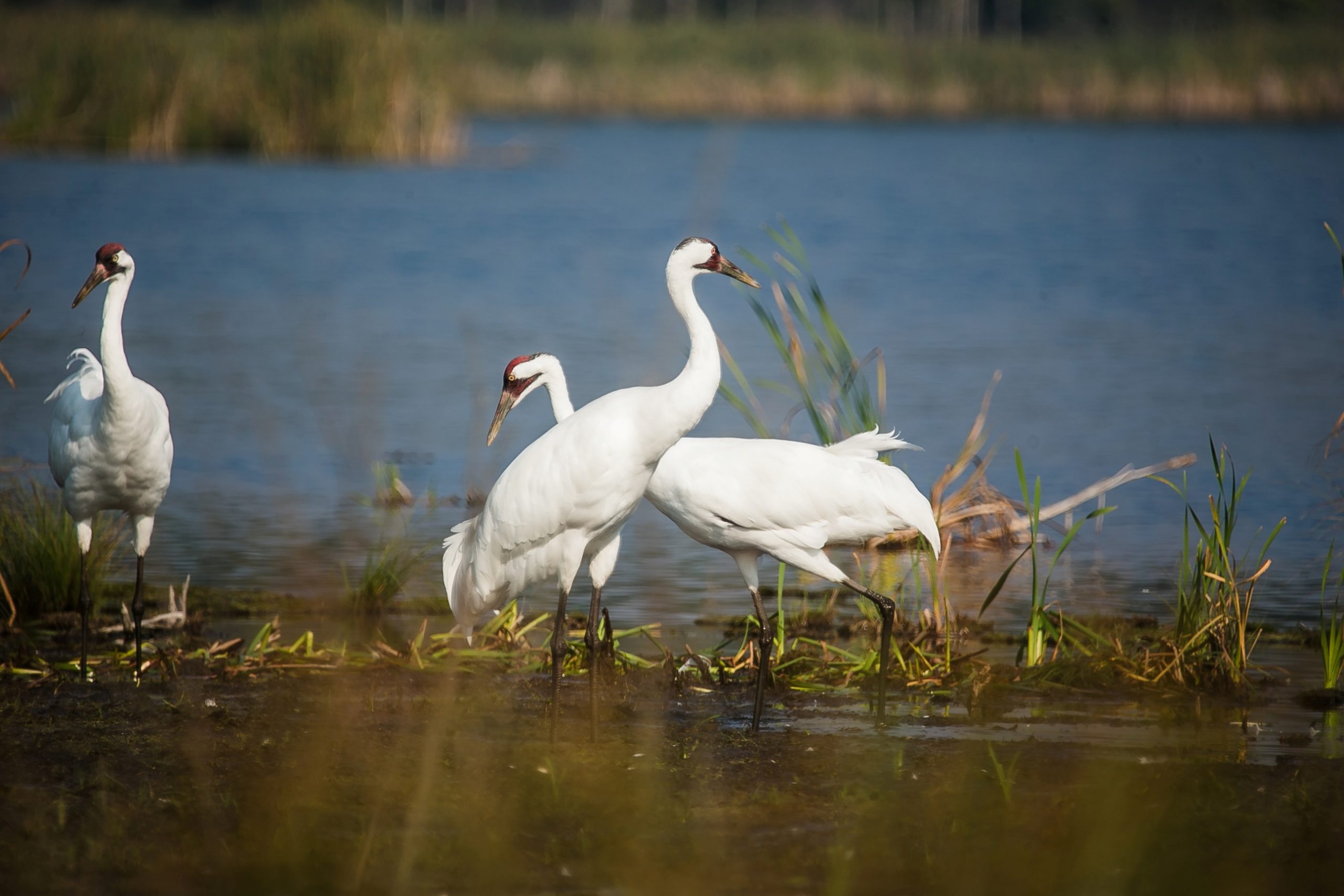
[Alberta / Northwest Territories] – Larger than Switzerland at roughly 55,000 km2, straddling Alberta and the Northwest Territories, the Wood Buffalo KBA is one of the most ecologically remarkable places on Earth. A UNESCO World Heritage Site, it is home to the entire global wild breeding population of the Endangered Whooping Crane – a species once reduced to 20 individuals in the wild. Though now recognized as a Key Biodiversity Area (KBA), Wood Buffalo faces mounting pressures severe enough to put its World Heritage status at risk of being lost.
“Wood Buffalo is a great example of why KBAs matter, even in well-known places. Despite the multifaceted importance of this globally significant site, Wood Buffalo still faces increasing pressure from development, and resource use. The KBA recognition further highlights the urgency of addressing these threats and gives one more tool to advocate for and support effective stewardship and management in this exceptional site.” Peter Soroye, KBA Assessment and Outreach Coordinator, WCS Canada.
“In my time working on this site, I’ve seen how important collaboration is for the future of Whooping Cranes. Indigenous leaders and communities, governments, and conservation experts are coming together to protect these living dinosaurs. This KBA designation is a meaningful reflection of that shared commitment.” Amanda Bichel, KBA Coordinator, Birds Canada.
Wood Buffalo KBA holds the second-largest wild American Bison population on Earth, after Yellowstone National Park, and the only herds in Canada that have continuously persisted in their native range. The KBA includes the Peace-Athabasca Delta, one of the largest freshwater deltas in the world, and a nesting and staging area for up to a million waterfowl from all four North American flyways every year. This site is also a stronghold for iconic and culturally important species like Boreal Caribou, Wolverine, Moose, Black Bear and Gray Wolf, and home to several unique species including the rare Woodland Tiger Moth and Raup’s Fringed Gentian.
“Recognizing Wood Buffalo as Key Biodiversity Area is an important step toward ensuring that the full ecological value of this landscape is reflected in how development is planned and managed. With industrial development affecting the region, identifying what is at stake is essential to finding a path that protects its exceptional biodiversity”. Pamela Narváez-Torres, Conservation Specialist at Alberta Wilderness Association.
The KBA designation comes at a critical moment. Climate change, oil and gas development, and hydroelectric dam activity are placing significant pressure on the site’s ecosystems and water levels and quality, with implications for both biodiversity and the communities dependant on these landscapes.
Wood Buffalo KBA encompasses much of Wood Buffalo National Park and some of its surrounding area, covering Treaty 8 lands and the traditional territories of several First Nations and Métis Peoples. The site remains an incredibly important cultural landscape, supporting traditional harvesting of wildlife and medicines. Indigenous communities in the region are at the forefront of protection efforts: the Kitaskino Nuwenëné Wildland Park, an Indigenous Protected and Conserved Area (IPCA) managed by Mikisew Cree First Nation, overlaps with the KBA, and Little Red River Cree Nation has proposed a separate IPCA in the area.
“The Mikisew Cree First Nation have been calling for stronger protection of Wood Buffalo and the Peace-Athabasca Delta since our 2014 petition to UNESCO. The Key Biodiversity Area designation reinforces what our people have always known: this landscape is globally important, and it sustains species that are central to our culture and way of life. Recognizing the importance of species such as Wood Bison, Whooping Crane and other culturally significant wildlife must translate into better management decisions, stronger stewardship and real protection from the pressures that continue to threaten them.” Chief Melody Lepine, Mikisew Cree First Nation.
Wood Buffalo KBA is the 400th site in Canada’s national KBA network — a milestone built on collaborative work with Indigenous communities, local NGOs, experts, and government agencies across the region, a process that can span more than a year. By identifying places of global and national significance using rigorous scientific criteria, KBAs help to guide planning, inform impact assessments, and support community-based and Indigenous-led conservation efforts on the ground across the country.
About KBAs
- KBAs are sites that contribute to the persistence of biodiversity nationally and globally.
- KBAs support rare and threatened species and ecosystems, as well as key natural processes. They range in size from small patches of habitat to large tracts of land or water.
- KBAs are designated based on specific, measurable criteria.
- The designation does not give the site a particular management prescription or legal status.
- KBAs may encompass private or public land, sometimes overlapping, partially or entirely, with legally protected sites.
- In Canada, KBAs are identified in consultation with local communities and experts
- Visit: KBA Canada (kbacanada.org)
About KBA Canada
- Canada has one of the world’s first comprehensive national programs to identify KBAs and was the first country to adapt the Global KBA Standard to a national context.
- The KBA Canada initiative was launched in 2019 to help Canada meet protected area targets and other targets agreed to in the Convention on Biological Diversity.
- This work is led by the KBA Canada Coalition, a collaborative initiative involving non-governmental organizations, governments, Indigenous partners, academic institutions, experts and knowledge-holders that are engaged in the work of identifying, delineating and reviewing KBAs.
- The KBA Canada initiative is jointly coordinated by Birds Canada, NatureServe Canada, and WCS Canada.
Media Contacts
- Ashleigh Talbot
Director of Communications
atalbot@wcs.org
Notes to Editors
Wood Buffalo KBA covers Treaty 8 lands and the traditional territories of the Dënéndeh, Denendeh (Dënësųłinë́ Nëné), ᓀᐦᐃᔭᐤ ᐊᐢᑭᕀ Nêhiyaw-Askiy (Plains Cree), Akaitcho, Cree, Beaver, and the Michif Piyii (Métis).
Media Package: Use with attribution only
- https://show.pics.io/wood-buffalo-kba
- Map of all KBAs: Map Viewer (org)